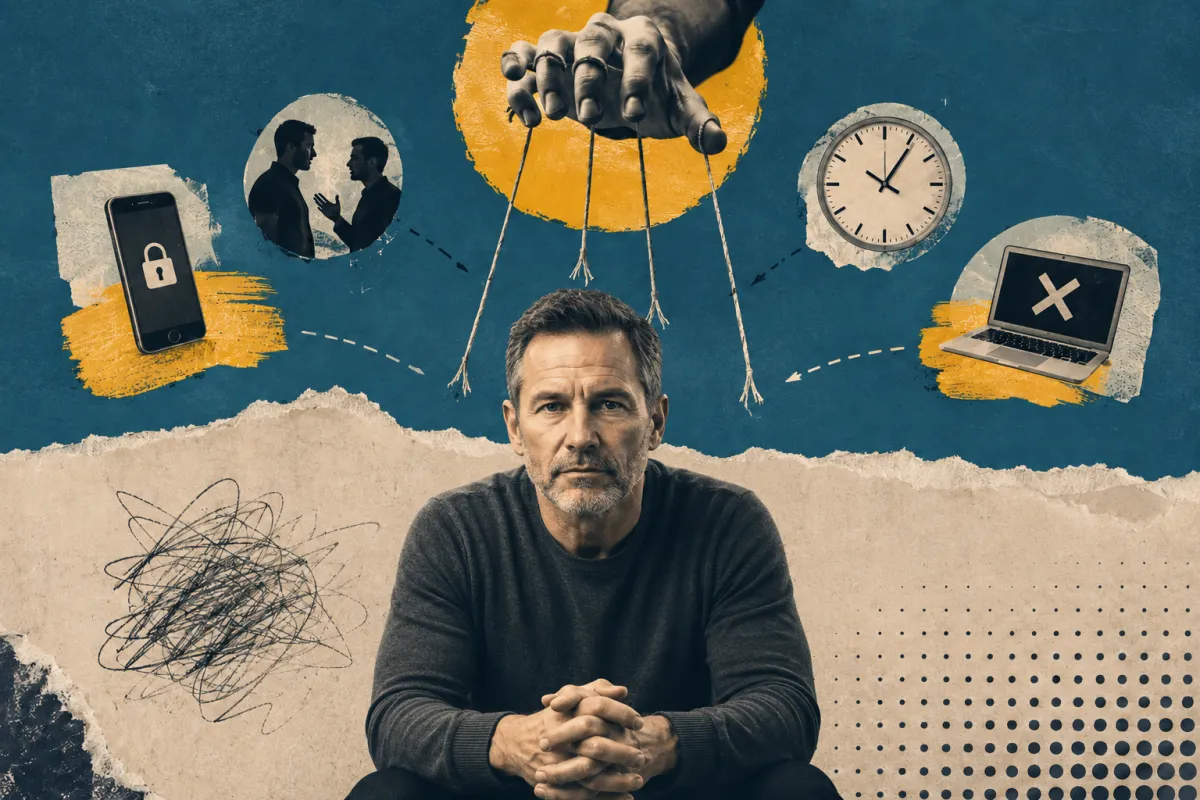
Why Accountability Alone Doesn’t Work for Porn Addiction
For years, Christian men have been told the same thing about porn addiction:
“You just need accountability.”
Get a software blocker.
Find an accountability partner.
Text someone when you’re tempted.
Confess after relapse.
And while accountability can help…
many men quietly discover something frustrating:
it still doesn’t create lasting freedom.
They install the software.
Join the group.
Check in consistently.
Yet somehow, they still relapse.
That experience leaves many men discouraged and confused.
Because if accountability is supposed to work…
why are so many sincere Christian men still trapped?
Here’s the truth most recovery systems fail to acknowledge:
Accountability is helpful.
But accountability alone is not recovery.
Real recovery requires something deeper.
Because pornography addiction is rarely just a behavior problem.
It’s often connected to:
emotional pain
shame
isolation
stress
nervous system dysregulation
identity confusion
disconnection from God
unresolved wounds
And no accountability app can heal those things by itself.
This article will explain:
why accountability alone often fails
what accountability actually is good for
what’s missing from most Christian recovery systems
and what creates real, lasting transformation
Why Accountability Became So Popular
To understand why accountability became the default recovery strategy, we need to understand what it actually does well.
Accountability provides:
external structure
visibility
consequences
honesty
interruption of secrecy
That matters.
Porn addiction thrives in darkness and isolation.
So when a man finally tells someone:
“I’m struggling.”
…it’s a significant step forward.
For many men, accountability is the first time:
secrecy breaks
honesty begins
support becomes possible
That’s important.
But somewhere along the way, many Christian men were taught to believe:
accountability is the solution.
And that’s where problems begin.
The Real Problem: Accountability Only Addresses Behavior
Most accountability systems focus primarily on managing actions.
They ask:
“Did you relapse?”
“Did you look at porn?”
“How many days clean?”
But they rarely ask:
“What pain are you escaping?”
“What emotions are driving this?”
“What happened before the relapse?”
“Why does porn feel necessary in certain moments?”
That’s a massive gap.
Because porn addiction is often about much more than sexual temptation.
For many men, pornography becomes:
stress relief
emotional escape
comfort
numbing
distraction
self-soothing
Which means the porn itself is often the symptom…
not the root problem.
Why Men Still Relapse Even With Accountability
This is the frustrating reality many men experience:
they can have accountability and still stay trapped.
Why?
Because accountability does not automatically heal:
shame
loneliness
anxiety
insecurity
trauma
emotional suppression
nervous system overload
And those unresolved issues continue driving behavior beneath the surface.
A man may genuinely want freedom while still lacking:
emotional tools
healing
self-awareness
healthy coping mechanisms
So eventually, when stress rises high enough…
the old escape pattern returns.
Not because he doesn’t care.
Not because he’s weak.
But because deeper transformation hasn’t happened yet.
Fear-Based Accountability Creates Performance Instead of Healing
Some accountability systems unintentionally create fear-driven recovery.
Men become more focused on:
not getting caught
protecting their image
preserving streaks
avoiding embarrassment
than actually healing.
That creates performance.
Not transformation.
A man may technically reduce porn use while still:
living in shame
hiding emotionally
feeling disconnected
remaining internally exhausted
Behavior modification without internal healing often leads to:
burnout
secrecy
discouragement
double lives
Real recovery requires more than external pressure.
Accountability Cannot Replace Emotional Health
One of the biggest missing pieces in Christian recovery culture is emotional maturity.
Many men were never taught how to:
process stress
regulate emotions
handle rejection
deal with loneliness
navigate anxiety
express vulnerability
identify emotional triggers
So pornography becomes the coping mechanism.
Then accountability attempts to restrain the behavior…
without replacing the emotional function porn has been serving.
That’s why many men relapse during:
stress
exhaustion
conflict
loneliness
emotional overwhelm
Porn becomes relief.
Until healthier emotional systems are built, the brain continues returning to familiar escape patterns.
Accountability Cannot Heal Shame
This is huge.
Many Christian men secretly hate themselves after relapse.
They feel:
dirty
weak
hypocritical
spiritually disqualified
And shame quietly strengthens addiction.
Because shame creates pain.
And porn becomes the escape from that pain.
Which means the cycle feeds itself:
relapse
shame
isolation
emotional pain
more porn use
Accountability can expose behavior.
But exposure alone does not heal shame.
Healing requires:
grace
honesty
identity restoration
emotional safety
brotherhood
spiritual renewal
What Accountability Actually Works Best For
Now let’s be clear:
this article is NOT anti-accountability.
Healthy accountability is valuable.
But it works best as:
a support tool
—not the entire recovery strategy.
Good accountability helps:
reduce secrecy
increase honesty
interrupt impulsive behavior
create structure
encourage consistency
But it must exist inside a larger transformation process.
Otherwise it becomes behavior policing instead of healing.
What Christian Men Actually Need for Lasting Freedom
At DeepClean, we’ve found that long-term recovery usually requires several things working together simultaneously.
1. Self-Awareness
Men must understand:
triggers
emotional patterns
stress responses
thought loops
nervous system states
Without awareness, relapse feels random.
With awareness, patterns become predictable.
2. Emotional Healing
Many men use porn to medicate unresolved pain.
Recovery often requires addressing:
rejection
insecurity
loneliness
fear
emotional suppression
unmet emotional needs
You cannot heal compulsive behavior while ignoring the wounds beneath it.
3. Brotherhood
Not just accountability.
Brotherhood.
There’s a difference.
Accountability says:
“Did you mess up?”
Brotherhood says:
“What’s really going on beneath the surface?”
Healthy brotherhood creates:
honesty
support
challenge
emotional safety
perspective
connection
And connection weakens addiction.
4. Identity Transformation
Many men still fundamentally see themselves as:
addicts
failures
hypocrites
But identity shapes behavior.
Freedom grows when a man begins becoming:
integrated
purposeful
emotionally strong
spiritually grounded
trustworthy
Recovery is not merely about stopping porn.
It’s about becoming the kind of man who no longer needs it.
5. Spiritual Renewal
Porn addiction is not only neurological or emotional.
It’s spiritual too.
Many Christian men need:
restored intimacy with God
honest confession
deeper surrender
renewed identity in Christ
healing from shame
Not religion driven by fear.
Relationship rooted in transformation.
What Real Recovery Looks Like
Real recovery is deeper than:
avoiding websites
maintaining streaks
trying harder
Real recovery means:
emotional resilience
self-awareness
spiritual alignment
honesty
healthy relationships
purpose
integrity
And ironically, when those things begin growing…
porn often loses its power naturally.
Because the man himself is changing.
If Accountability Hasn’t Worked for You, Don’t Lose Hope
Many men feel discouraged because they’ve tried accountability repeatedly and still struggle.
But that doesn’t mean freedom is impossible.
It may simply mean:
you’ve been using incomplete tools for a deeper problem.
Accountability matters.
But lasting transformation requires:
healing
brotherhood
emotional growth
spiritual renewal
identity change
practical recovery systems
Real freedom is possible when the entire man begins healing.
Final Thoughts
Accountability alone doesn’t work because porn addiction is rarely just about behavior.
It’s about:
emotional escape
shame
isolation
nervous system patterns
identity
disconnection
Which means lasting freedom requires more than external monitoring.
It requires transformation from the inside out.
Not just:
“How do I stop watching porn?”
But:
“How do I become whole again?”
That’s where real recovery begins.
Ready to Move Beyond Behavior Management?
Download a free chapter of The Last Relapse and discover why most men stay trapped — and what actually creates lasting freedom.
Download a free chapter of The Last Relapse — Sathiya Sam’s step-by-step guide for Christian men who are tired of shame, secrecy, and behavior management strategies that never work long term.
Want a practical recovery roadmap built specifically for Christian men?
Watch the free DeepClean training covering the neurological, emotional, and spiritual roots of pornography addiction.
Watch the free DeepClean training designed to help Christian men break free from pornography by addressing the neurological, emotional, and spiritual roots of addiction.
Looking for more than surface-level accountability?
DeepClean Inner Circle helps Christian men pursue real transformation through brotherhood, coaching, structure, and healing-centered recovery.
DeepClean Inner Circle is a community of Christian men pursuing real transformation together — with coaching, accountability, structure, and support designed for lasting recovery.