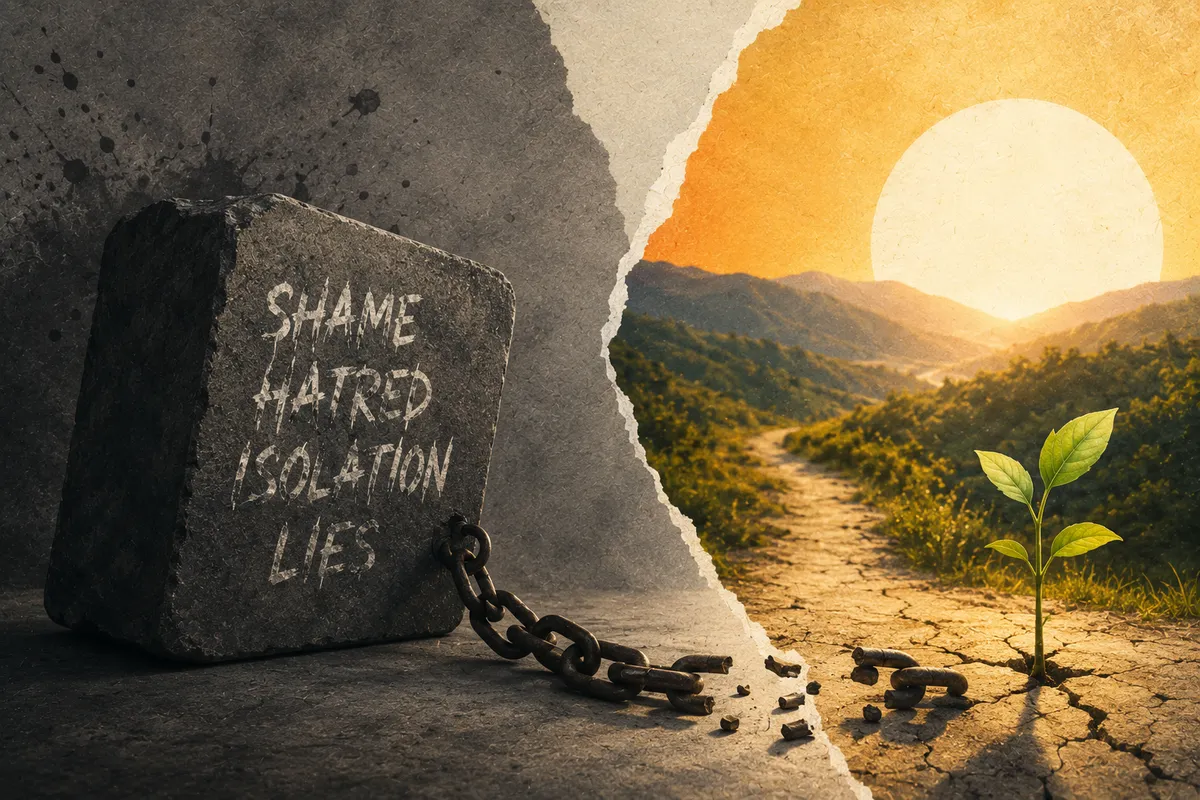
Shame and Porn Addiction: Why Hating Yourself Keeps You Stuck
Most Christian men think shame will help them quit porn.
They believe if they feel bad enough, guilty enough, or disgusted enough, they’ll finally stop.
So after relapse, they beat themselves up.
They tell themselves:
“I’m disgusting.”
“I’m weak.”
“I’m such a hypocrite.”
“God must be tired of me.”
“I’ll never change.”
And for a moment, that shame feels like conviction.
It feels spiritual.
It feels serious.
It feels like proof that they care.
But over time, many men discover something disturbing:
The more they hate themselves, the more trapped they become.
Because shame does not heal addiction.
Shame often strengthens it.
This article will explain:
why shame fuels porn addiction
the difference between conviction and condemnation
why Christian men often confuse the two
how shame creates relapse cycles
and what real freedom requires instead
Shame Feels Spiritual, But It Often Pushes Men Away From God
Many Christian men assume feeling terrible after relapse is proof that their heart is right.
And to be clear, conviction matters.
If a man can sin without concern, something is wrong.
But conviction and shame are not the same thing.
Conviction says:
“This is not who you are. Come back into the light.”
Shame says:
“This is exactly who you are. Hide.”
Conviction draws a man toward God.
Shame drives him away.
Conviction leads to repentance.
Shame leads to isolation.
Conviction produces hope.
Shame produces despair.
The problem is that many Christian men have lived under shame for so long that condemnation feels normal.
They think God’s voice sounds like self-hatred.
But it does not.
Shame Creates Emotional Pain
After relapse, many men experience intense emotional pain.
They feel:
dirty
exposed
embarrassed
discouraged
hopeless
spiritually disqualified
That pain becomes overwhelming.
And what has the brain learned to use when emotional pain becomes overwhelming?
Porn.
So the very shame that feels like it should prevent relapse often becomes the emotional trigger for the next one.
That is the trap.
The cycle looks like this:
temptation
relapse
shame
isolation
emotional pain
more porn use
The man thinks porn is the problem.
And it is.
But shame is often the fuel keeping the cycle alive.
Shame Makes Men Hide
Porn addiction grows in secrecy.
And shame is one of the strongest forces driving secrecy.
A man may want help, but shame tells him:
“Don’t tell anyone.”
“They’ll lose respect for you.”
“You’ll disappoint them.”
“You’ll be rejected.”
“You should already be past this.”
So he hides.
He deletes history.
Uses vague language.
Avoids honest conversations.
Keeps spiritual distance.
Pretends he’s doing better than he is.
Externally, he may still look fine.
But internally, the addiction grows stronger.
Because hidden pain becomes powerful pain.
Shame Attacks Identity
Guilt says:
“I did something wrong.”
Shame says:
“I am wrong.”
That difference is massive.
A man who feels guilt can repent and move toward restoration.
A man buried in shame starts believing relapse defines him.
He no longer sees himself as a son of God fighting for freedom.
He sees himself as:
an addict
a hypocrite
a failure
a fraud
a lost cause
And identity shapes behavior.
If a man deeply believes he is a failure, he will eventually behave in alignment with that identity.
This is why identity transformation is essential to recovery.
A man cannot hate himself into becoming whole.
Shame Distorts How Men See God
Many Christian men struggling with pornography secretly believe God is angry, distant, or disappointed.
So after relapse, they avoid Him.
They think:
“I’ll come back after I get clean again.”
But this turns recovery into performance.
The man begins relating to God based on his latest streak.
If he is doing well, he prays.
If he relapses, he hides.
That is not intimacy.
That is fear.
God does not invite men into hiding.
He invites them into truth.
Not to minimize sin.
But to heal what shame keeps buried.
The Gospel Is Not Shame Management
Romans 8:1 says:
“There is therefore now no condemnation for those who are in Christ Jesus.”
No condemnation does not mean no repentance.
It means condemnation is not God’s method of transformation.
Jesus confronted sin clearly.
But He also restored people.
He moved toward the broken.
He touched the unclean.
He called hidden people into light.
He offered grace that produced change.
The gospel does not say:
“Pretend sin isn’t serious.”
It says:
“Sin is serious, and grace is stronger.”
Christian men need both truth and grace.
Truth without grace crushes men.
Grace without truth leaves men unchanged.
Real recovery requires both.
Why Shame-Based Recovery Fails
Shame-based recovery usually focuses on pressure.
A man tries to quit because he fears:
being exposed
disappointing people
losing his relationship
being judged
being punished
feeling guilty again
Fear can create short-term change.
But it rarely produces deep freedom.
Because fear does not heal the roots.
It may stop behavior temporarily, but it does not restore:
emotional health
self-respect
spiritual intimacy
nervous system regulation
brotherhood
identity
Eventually, the pressure becomes unbearable.
And the man returns to the old escape.
What Healing From Shame Looks Like
Healing from shame does not mean becoming casual about sin.
It means learning to face sin without letting it define you.
That requires several things.
1. Honest Confession
Shame dies in the light.
But confession must be more than reporting failure.
Real confession sounds like:
“Here’s what happened, here’s what I was feeling, and here’s what I’m afraid to admit.”
That kind of honesty breaks the double life.
2. Safe Brotherhood
Men need places where they can be fully known and still challenged toward growth.
Not soft permission.
Not harsh condemnation.
Brotherhood.
Men who will say:
“You are not beyond freedom, but you cannot keep hiding.”
That kind of environment weakens shame deeply.
3. Identity Renewal
A man must stop defining himself by his worst pattern.
He must begin agreeing with what God says about him.
That does not mean ignoring responsibility.
It means refusing to let shame write his identity.
He is not simply a man trying not to fail.
He is becoming a man of integrity.
4. Emotional Healing
Shame often attaches to old wounds.
Rejection.
Failure.
Abandonment.
Insecurity.
Feeling weak.
Feeling unwanted.
Porn may be connected to those wounds.
So recovery must address more than behavior.
It must address the pain beneath it.
5. Returning to God Quickly
After relapse, many men wait until they feel worthy to pray.
But healing begins when a man turns toward God immediately.
Even with tears.
Even with frustration.
Even with confusion.
The prayer may be simple:
“Father, I don’t want to hide anymore.”
That is often where freedom begins.
Final Thoughts
Shame will not free you from porn addiction.
It will keep you trapped in hiding.
The way forward is not self-hatred.
It is truth.
Grace.
Honesty.
Brotherhood.
Healing.
Identity transformation.
You do not need to minimize sin.
But you also do not need to become condemned by it.
There is a better way.
Freedom begins when shame loses its authority over your identity.
And that happens when you stop hiding and start healing.